Range bands and siege crews
Why an arrow bites harder close in, why guns misfire, and why our cannon crews sponge, load and run out their guns on screen.
Written in retrospectCovers: 25 September – 15 October 2026
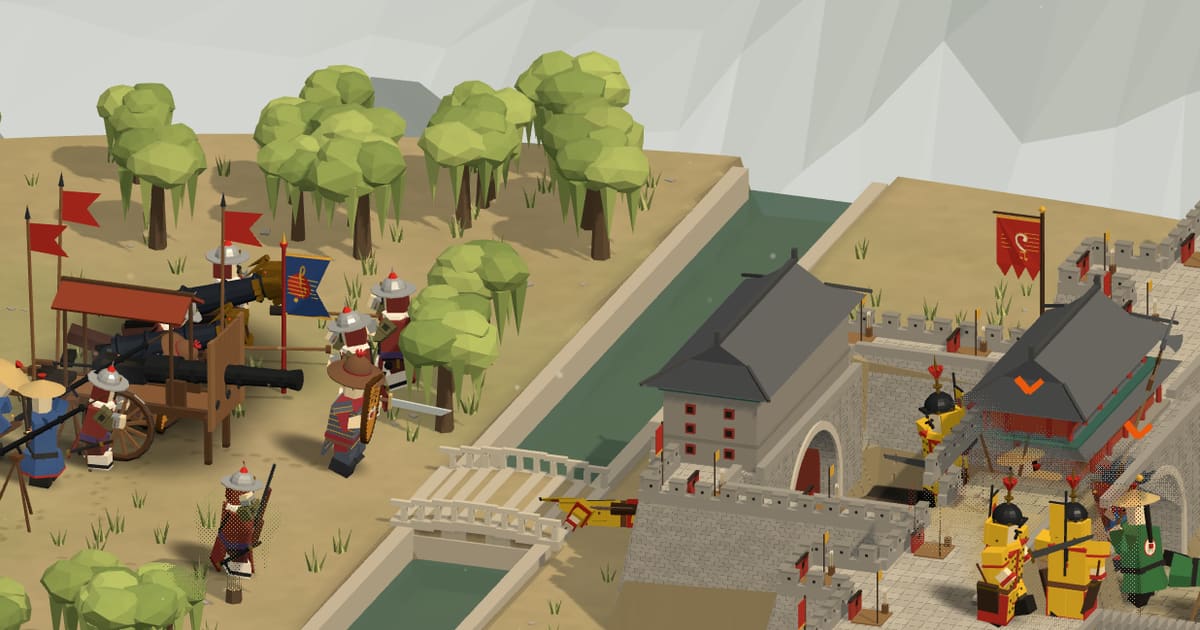
Missile weapons are where a game can easily drift from history. A bow that hits as hard at its last stretch of range as it does at twenty paces is simple to build, and wrong. On 2 October we rebalanced every ranged unit in Kaastle around how far a shot has flown.
Where it started
The spark was a passage on Zhihu (知乎) comparing Ming firearms with Qing archery. We turned that reading into a set of rules, and range sat at the heart of them.
Three bands
Every shot is now near (within 40% of the weapon's range), mid, or far (beyond 75%). Each kind of missile treats them differently:
So archers want to let their enemy come close, and gunners lose less to distance than bows do. With the bands came other rules from the same reading: moving targets are harder to hit, armour and attack types matter, a shooter may kite or draw steel when the enemy closes, and a volley costs its targets morale.
Black powder is not clean
Guns in Kaastle are loud, smoky and imperfect. Each weapon has its own rate of fire. Black powder leaves smoke on the field, an ordinary gun misfires 5% of the time, and a wall gun can burst (1%). A gun in a fort is steadier than one in the open. Since 5 October, a gun knocks men back according to its bore: a hand gun barely, a great gun hard.
Crews you can watch
Siege engines and gun teams have crews. The Grand Siege Cannon arrived with its crew on 25 September, two-man wall-gun teams (抬枪, taiqiang) on 1 October, and the Folangji breech-loader on 8 October.
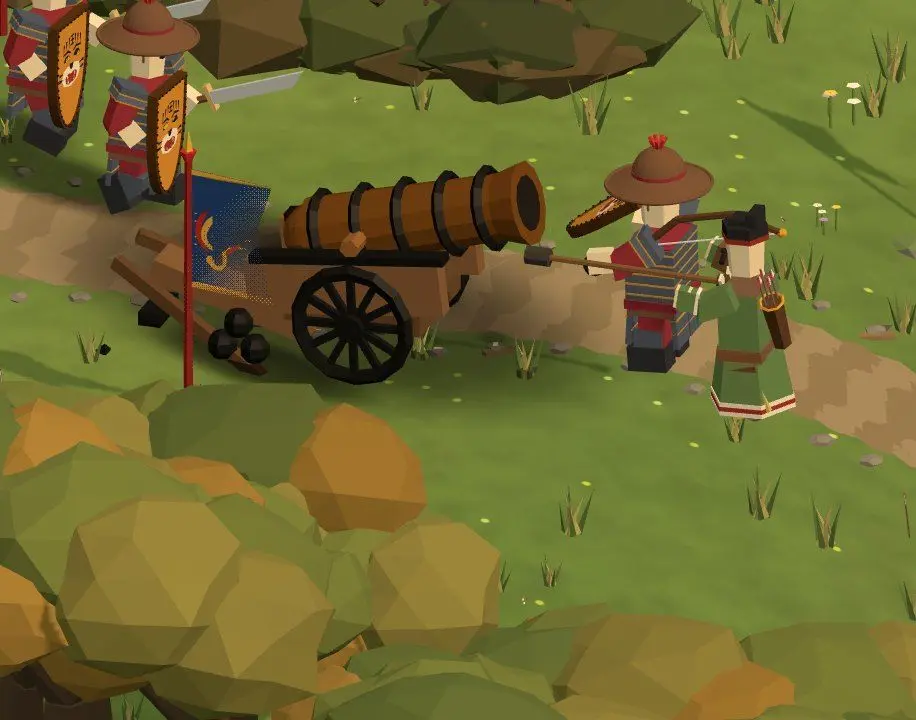
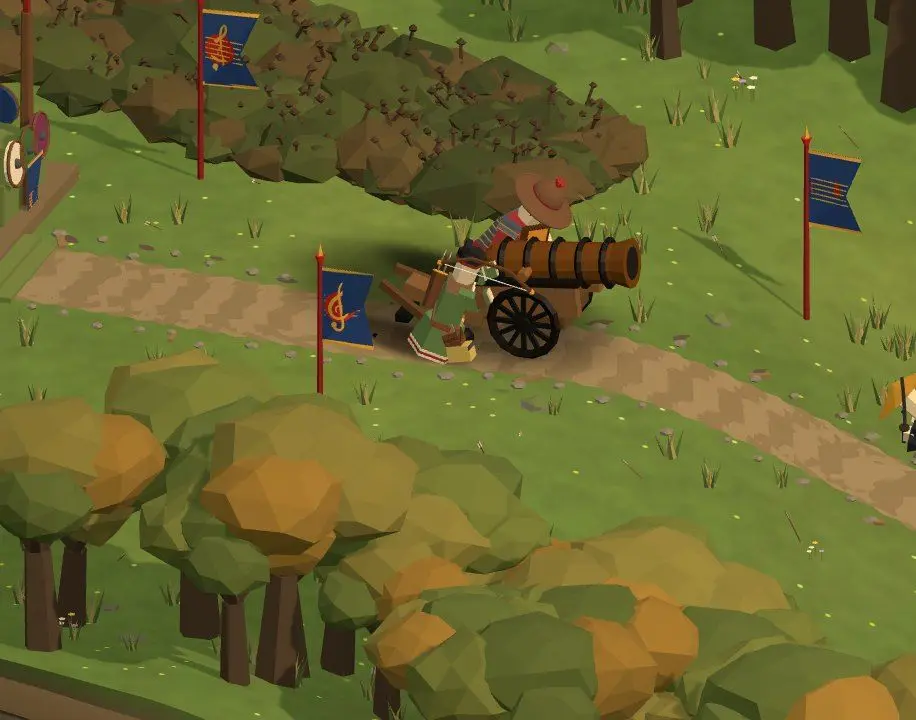
On 15 October we made the crews work on screen. A gun rolls back on its wheels when it fires and is run out again late in its drill. A muzzle-loader's crew sponges the bore, loads, rams and runs out, each step timed so the drill ends exactly when the gun is ready to fire again. Guns sit on slopes as the ground lies, and a landing shot throws up clods of earth.
The point of all this is not realism for its own sake. When an arrow storm thins out at long range and the enemy closes, you can see why the fight turned, and the history behind it becomes something you feel rather than something you read.