Small soldiers, real weight
From blocky figures to skinned soldiers who march, brace and stagger, and the sounds that go with them.
Written in retrospectCovers: 17 September – 13 October 2026
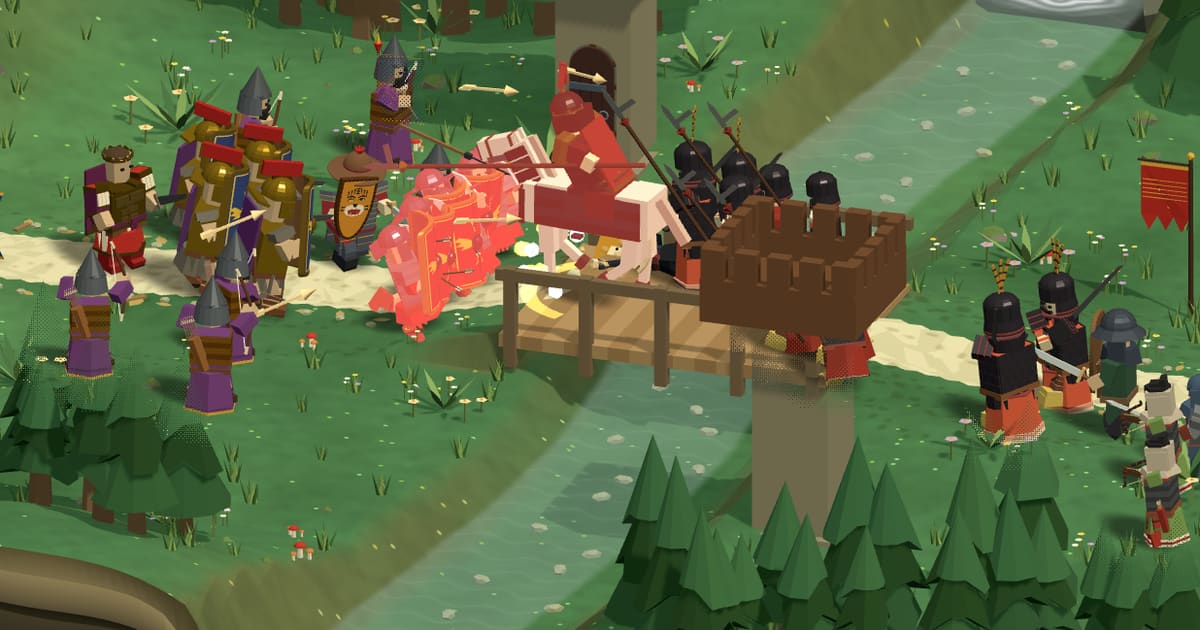
Kaastle's soldiers are small and low-poly on purpose. A battle should be readable at a glance while you are looking at your fretboard, and it should run on an ordinary laptop. But small does not have to mean stiff. A lot of our work has gone into making little figures move like men with weight.
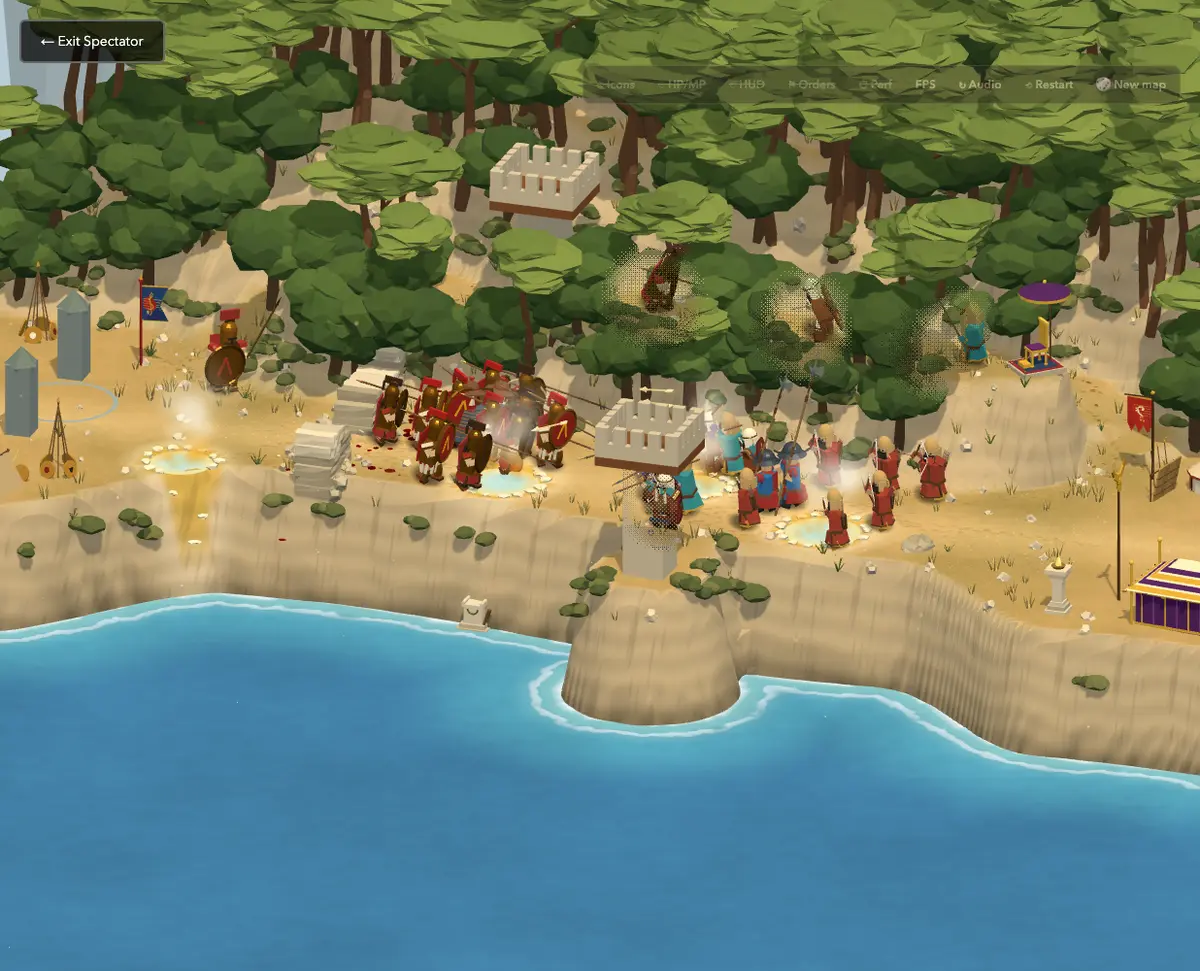
The field
- 17 September: articulated soldiers with their combat animation kept in step with the fight, and seeded terrain with rivers and biome borders.
- 23 September: trees, rocks and plants spread with Poisson disk sampling, a method that scatters things evenly but never in a grid, so a forest looks grown rather than planted.
- 25 September: footprints and wheel ruts pressed into snow, sand and dirt.
- 4 October: one Low, Medium or High graphics setting for every 3D view, so the game runs on more machines.
Skinned soldiers
Until early October each soldier was a set of rigid blocks that rotated at the joints. On 5 October we prototyped skinned soldiers, where one mesh bends smoothly at elbows, wrists, knees and ankles, and drew 200 of them in a single draw call by doing the skinning on the graphics card. On 6 October we carried the whole army over in phases: gaits, idles and blows, the dying and the fallen, riders, spells, musicians and standards.
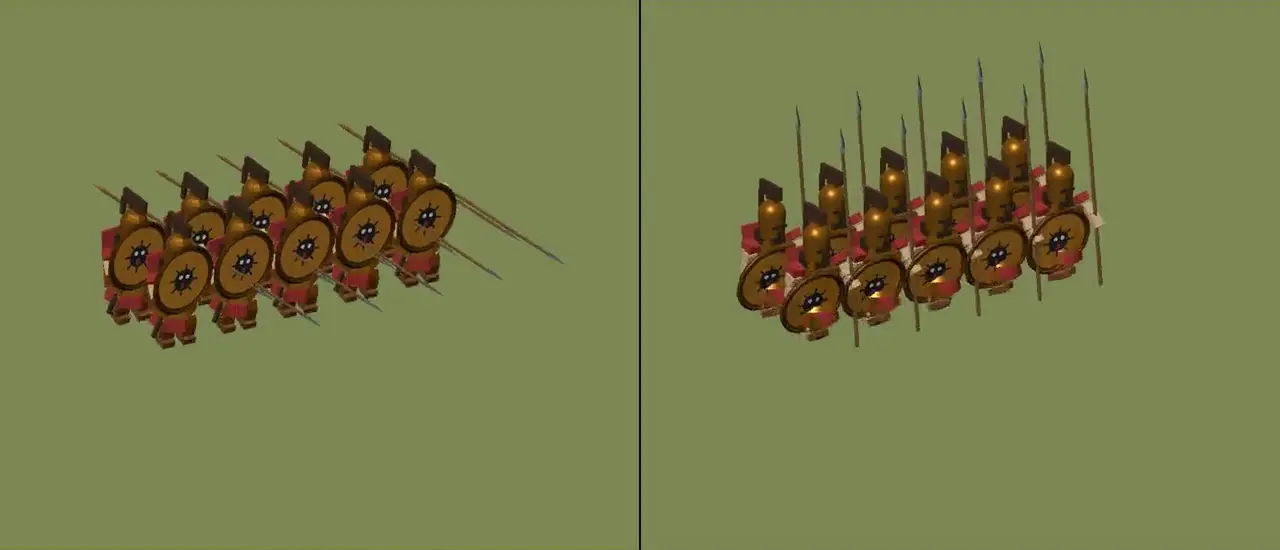
Skinning made formations possible to see. Shield walls overlap their rims. A phalanx crouches with spears ready. A hedgehog of pikes bristles outward, and a testudo raises its shields overhead. Sword, spear and polearm fighters chain their blows into combos you can follow even in a crowd.
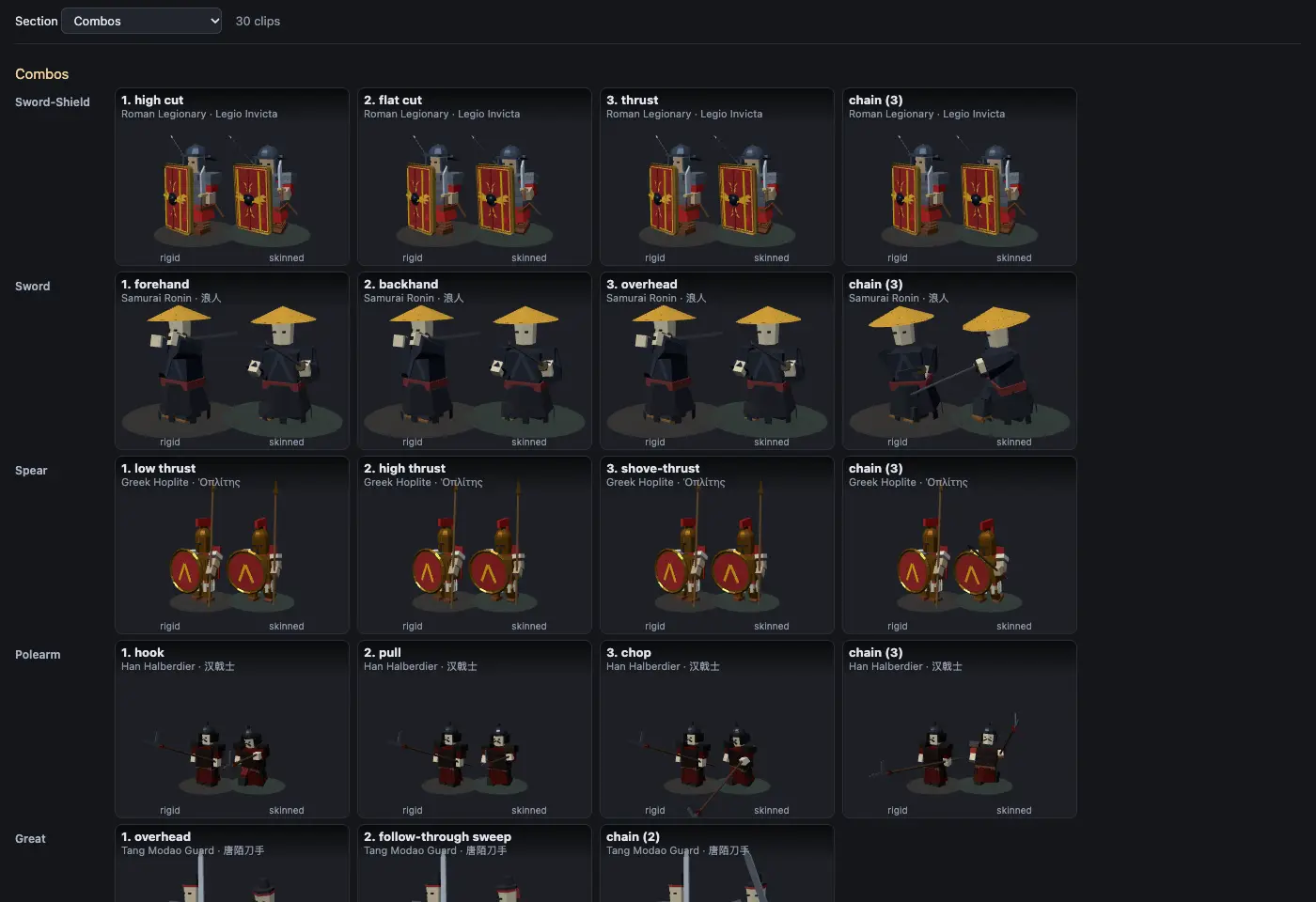
On 13 October foot soldiers stopped walking as copies of one another. Each man has his own stride, steps off the beat in a formed line, and walks in the style of his card: a line marches, a levy trudges, heavy troops roll.
Sound
We hold one firm rule for sound: real recordings, used sparingly. Combat sounds are recorded CC0 samples, mixed relative to the camera, with ambience for each kind of land (25 September). When a charge goes in, you hear a real crowd shouting, never a synthesised horn, and only rarely, so it still means something when you do. Horses get real recorded hoofbeats in step with their gait.
The goal is a battle that feels alive in the corner of your eye while your attention stays on the music.