The fretboard loop
How "play a note, field a soldier" became the heart of Kaastle, and why every question asks you to play rather than pick.
Written in retrospectCovers: 13–24 September 2026, with later refinements
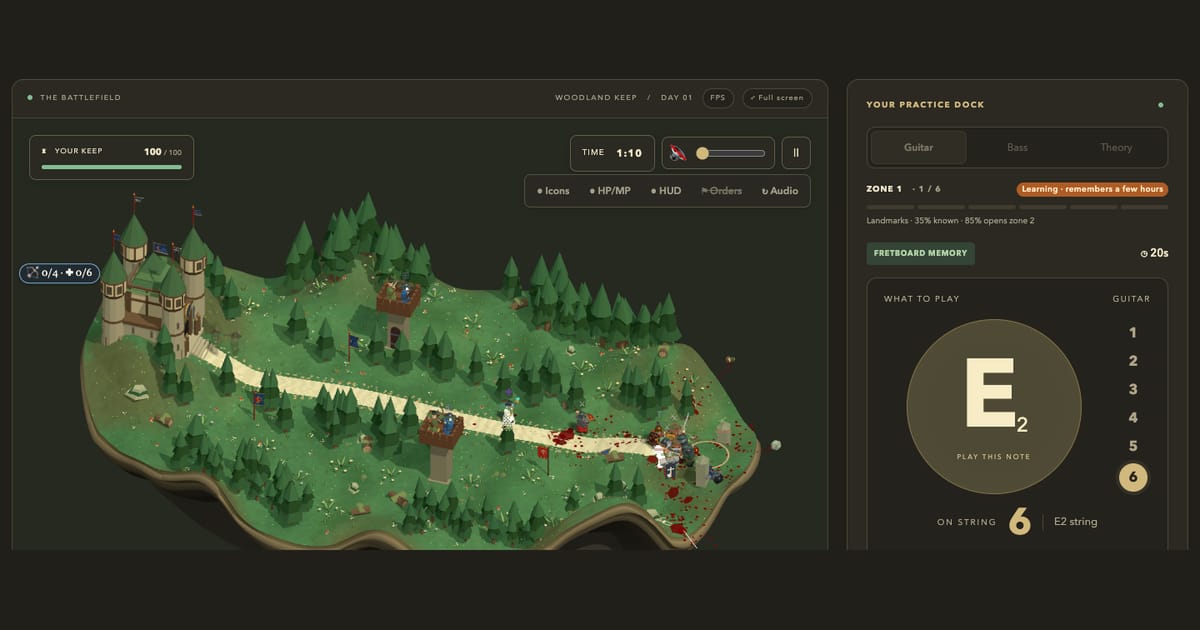
The very first version of Kaastle, on 13 September, did one thing. It named a note, you found it on the fretboard, and a defender appeared to protect your castle. Everything since has grown out of that loop.
Play, don't pick
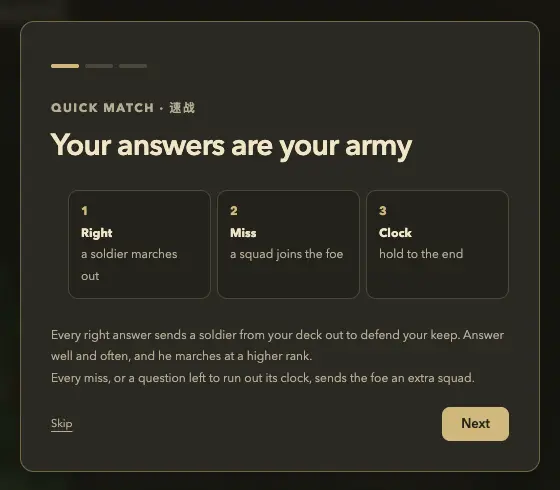
From the start we chose to make you produce the answer rather than recognise it. A multiple-choice quiz lets you guess; a fretboard does not. Pulling a note out of memory and putting your finger on it is exactly the skill a guitarist or bassist needs, and retrieving something is one of the most reliable ways to strengthen the memory of it.
What we added in the first two weeks
- 15 September: the game checks that your microphone really hears you before you start, and practice moved to short timed sessions with progress gated by mastery, so new notes open up only when the old ones are solid.
- 17 September: a wrong answer is asked again until you get it, and after three failed tries the answer is shown. Leaving someone stuck teaches nothing.
- 18 September: interval identification. You hear two notes on a piano and name the gap between them. Music theory joined the fretboard.
- 20 September: chord identification.
- 24 September: the arpeggio quiz: play the notes of a chord one after another.
Scale runs followed much later, on 15 October: play a named scale up one octave inside a five-fret box, with each right note lighting the next.
Stakes without panic
A battle needs pressure, but pressure can crowd out learning. So the clock is generous and tunable: each note gives you 24, 18 or 12 seconds on Easy, Medium and Hard. A Quick match lasts two minutes by default.
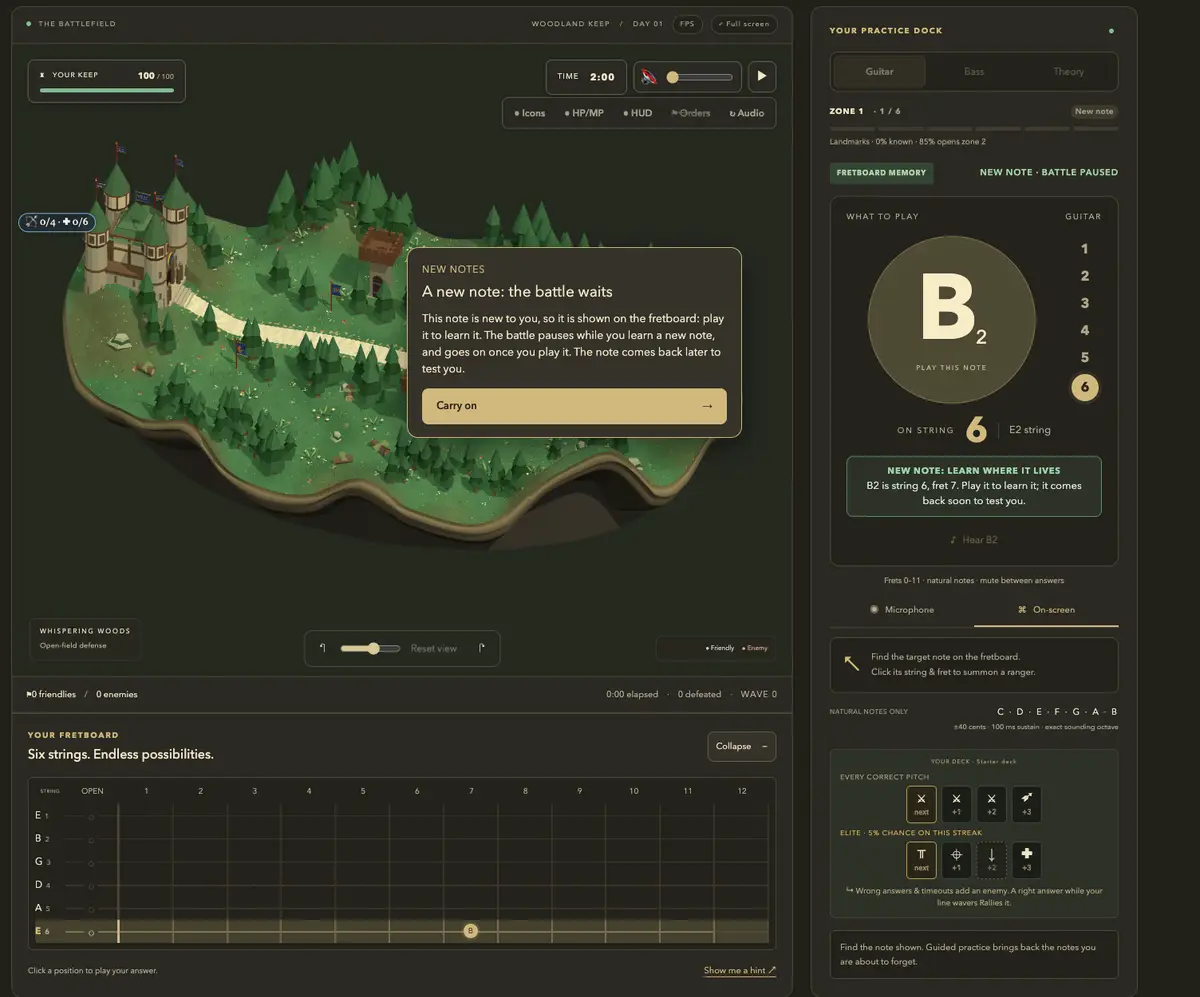
And when a note is new to you, the battle waits. Since 13 October, a note you have never met is shown on the fretboard with no clock at all; you play it once to learn where it lives, and it comes back a few questions later to be tested.
The loop is simple on purpose. Everything else in Kaastle, from the cards to the morale of the soldiers, is there to make that loop worth repeating every day.