Factions, fields and history
Two dozen factions from Greece to Joseon, battlefields drawn from real battles, and how we try to get them right.
Written in retrospectCovers: 29 September – 15 October 2026
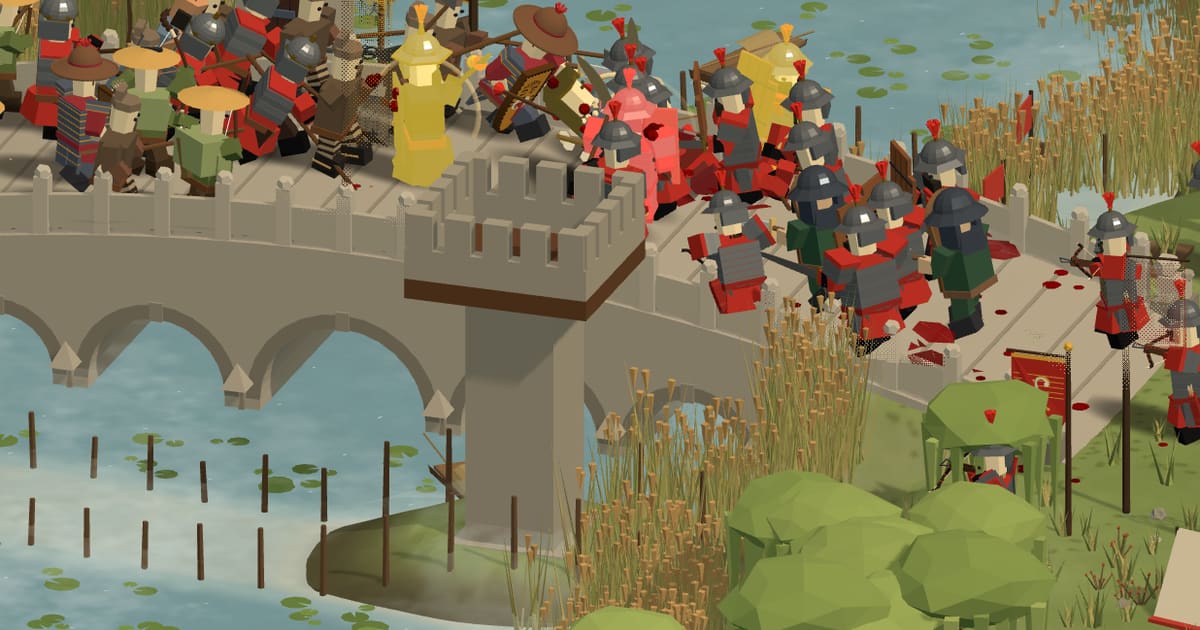
A game about practice could have any soldiers at all. We chose real ones. History gives every card a story worth knowing, and we wanted players from many places to find their own past on the field next to someone else's.
From hosts to factions
At first the armies were just "Eastern" and "Western" hosts. On 29 September we added seven historical factions: the Shatuo, a Classical Greek coalition, Rome, the Three Kingdoms, the Five Dynasties, Sengoku Japan and the Viking Age. Soon after, every card was given a faction of its own, and the vague hosts were hidden.
Then the roster grew, almost daily:
- Song dynasty with its generals, Yue Fei (岳飞) among them, and Peasant Uprisings (农民起义).
- Ming and Qing as separate factions, each with its own guns and soldiers.
- Rome, with the Republic merged in as Rome · Republic & Empire.
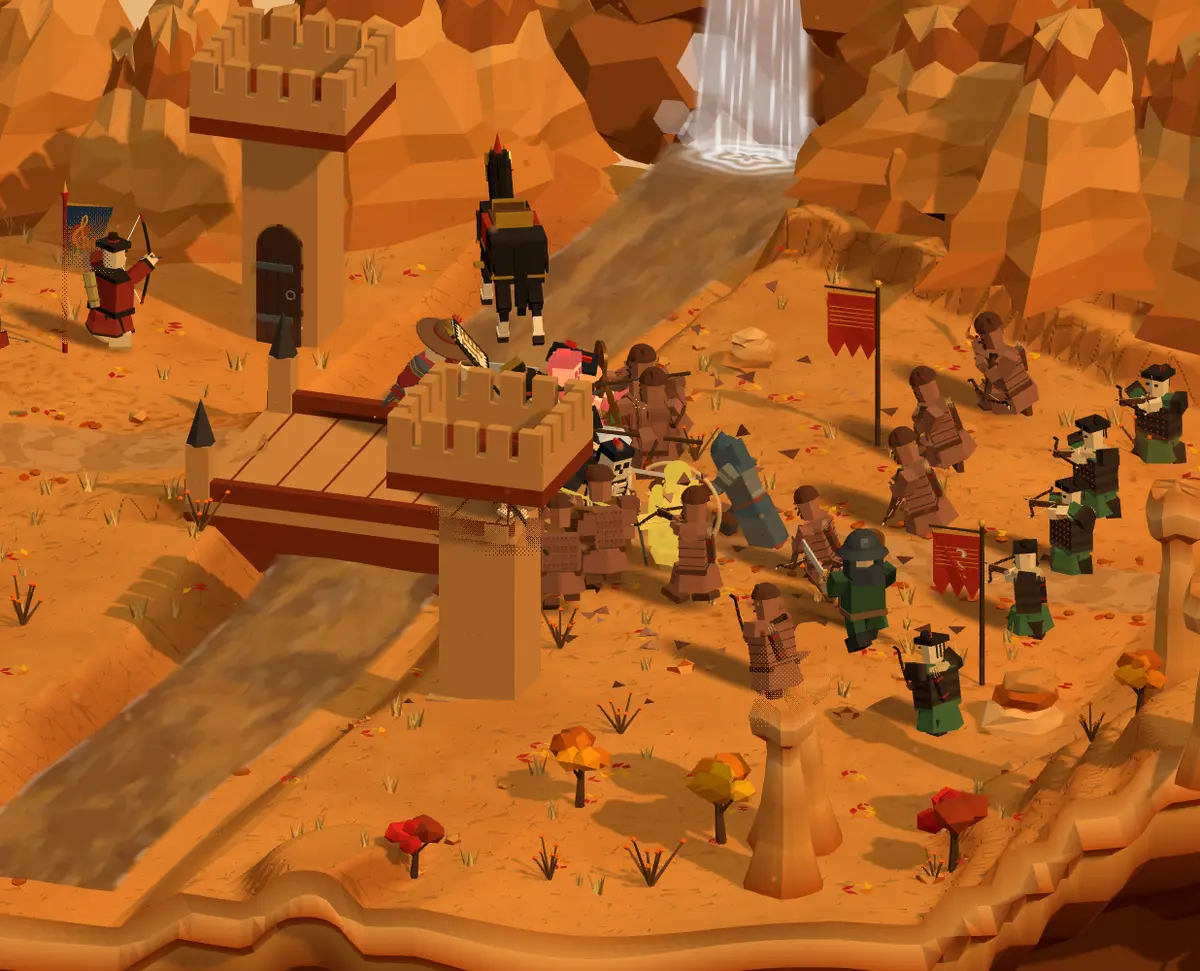
- On 4 October: Troy, Tang, Qin and Chu, Liangshan Marsh, the Mongol Empire, Joseon, Achaemenid Persia, a playable Han, and Pike & Shot.
- Warring States (春秋战国) on 6 October; in mid-October the Wandering Shamans (游巫), led by the Nishan Shaman (尼山萨满) of the Manchu legend.
Today the game has twenty-odd factions. Card names carry their own script beside the English: Yue Fei · 岳飞, Greek Hoplite · Ὁπλίτης.
Getting it right
We read before we model, and we change things when we learn more. A few examples from the commit history:
- Siege engines by people. Joseon keeps the hwacha, its famous rocket cart. Sengoku Japan had no rocket cart, so it fields the ōzutsu, a large-bore gun, instead.
- Han and Warring States crossbows (7 October) were rebuilt after the museum crossbow: the stock (臂), the prod, and the bronze trigger (弩机) with its sight (望山) and release (悬刀). The way they shoot draws on Chen Yin (陈音) in Wu Yue Chunqiu (吴越春秋).
- The Immortals of Persia were remade on 14 October from a written study of their dress: a white felt tiara whose flaps fall to the chest, a leather cuirass faced with gold scales, coloured sleeves and tall boots.
- The Qing were split into the armies they really fielded: the Banners, the Green Standard, and later the Xiang Army (湘军) and Huai Army (淮军).
Our rule for cards is that their tags must be truthful to what the card depicts.
Battlefields with a story
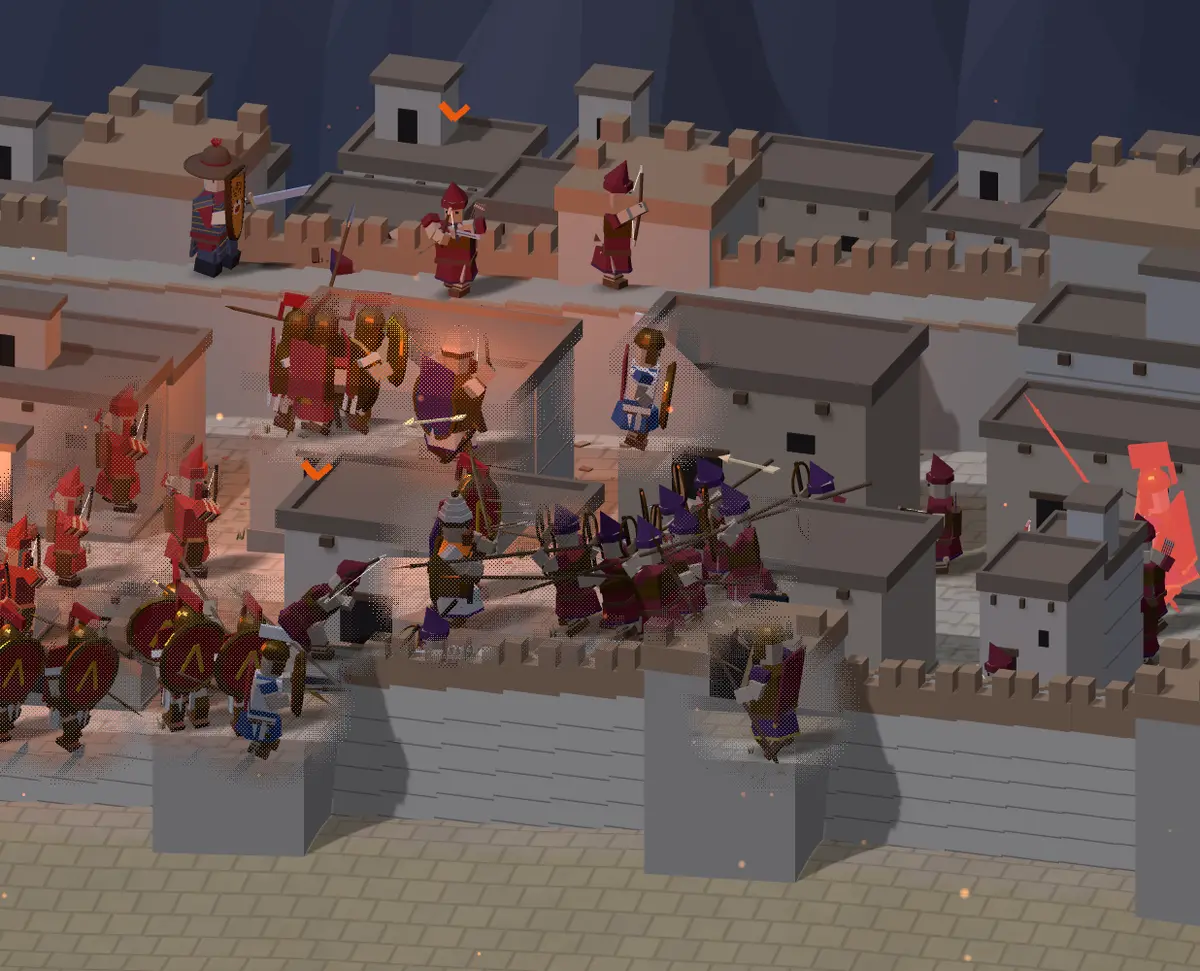
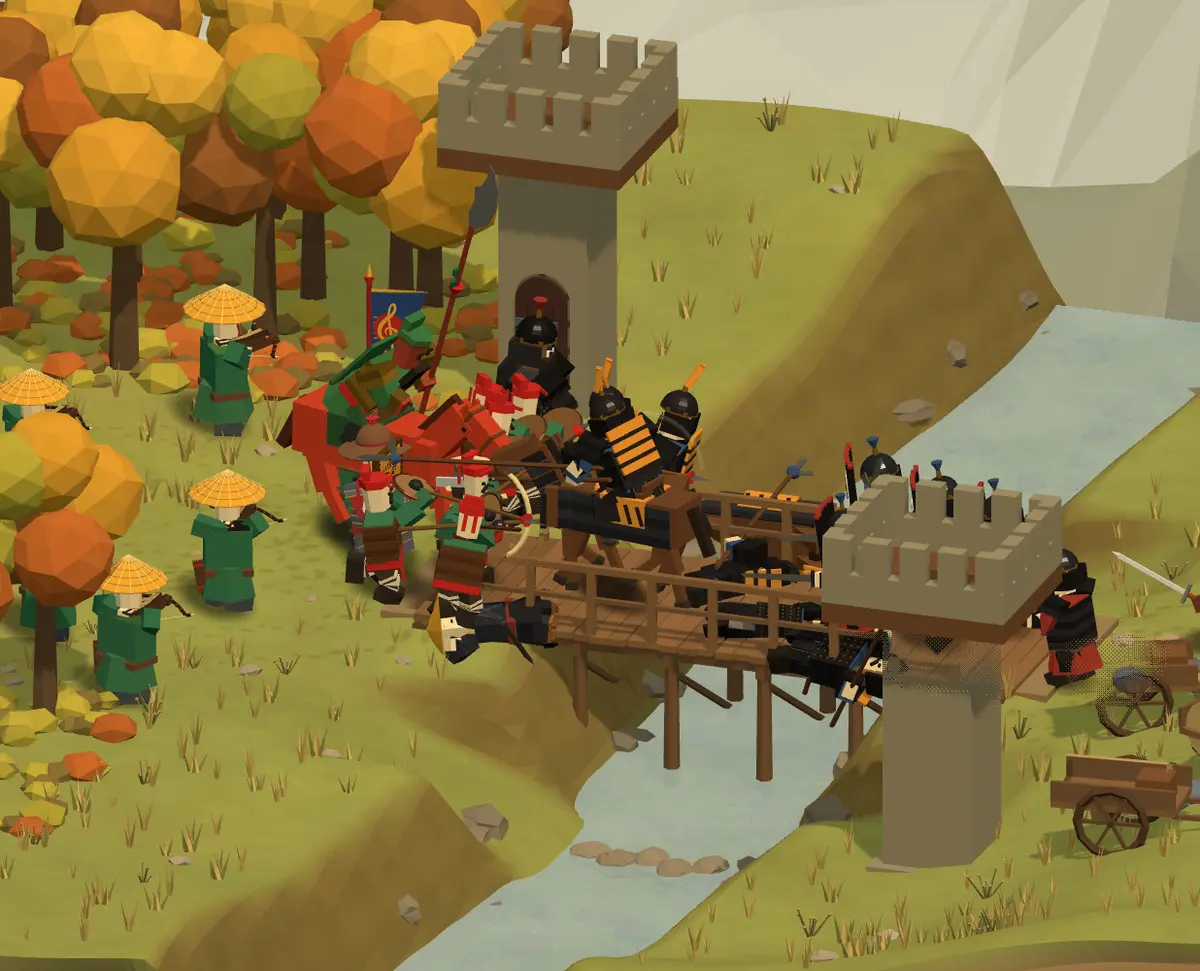
The fields came with the factions. Several are real places, and some are tied to particular battles:
- Thermopylae (3 October), the narrow pass of 480 BC.
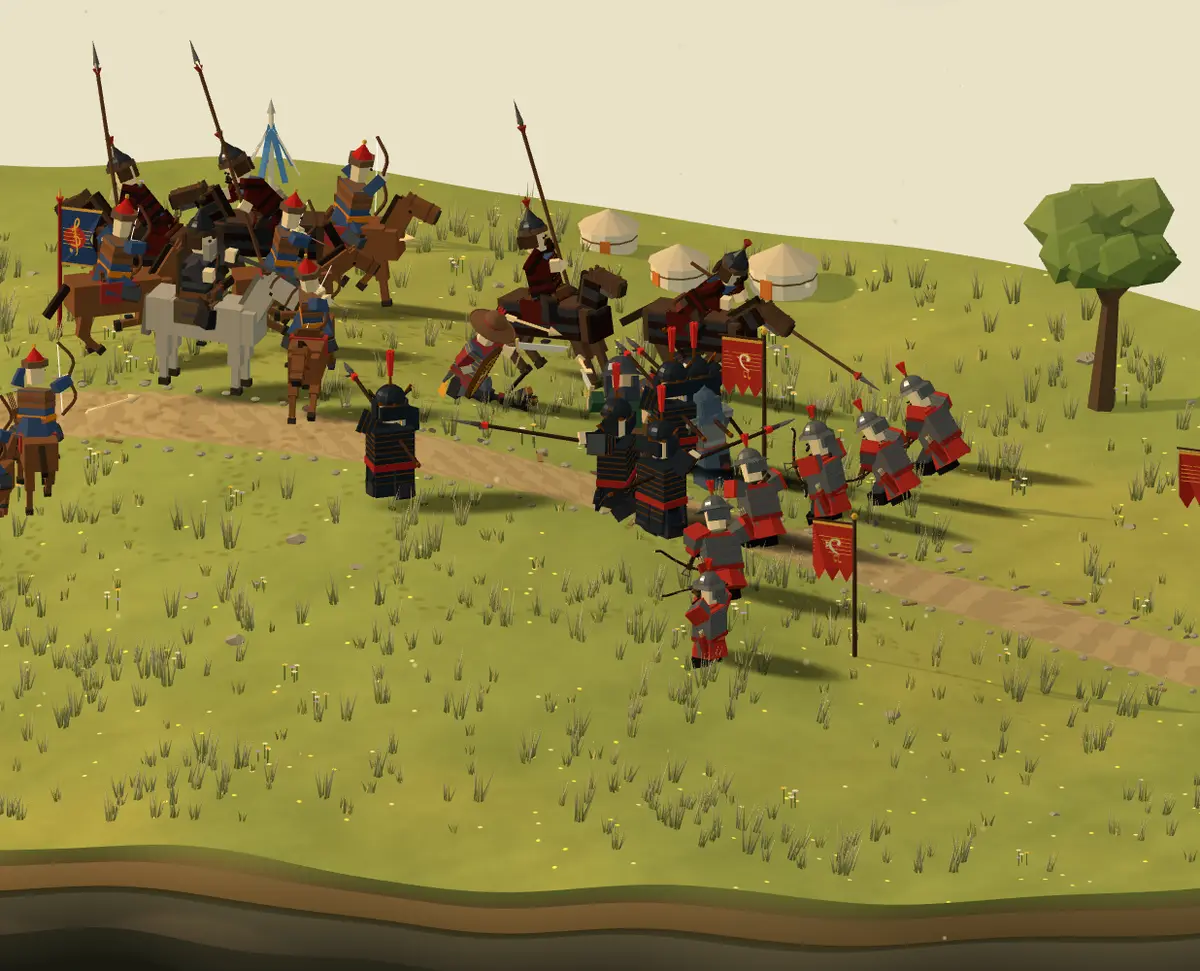
- Troy, Liangshan Marsh and the Chinese City Gate (4 October); The Steppe (6 October).
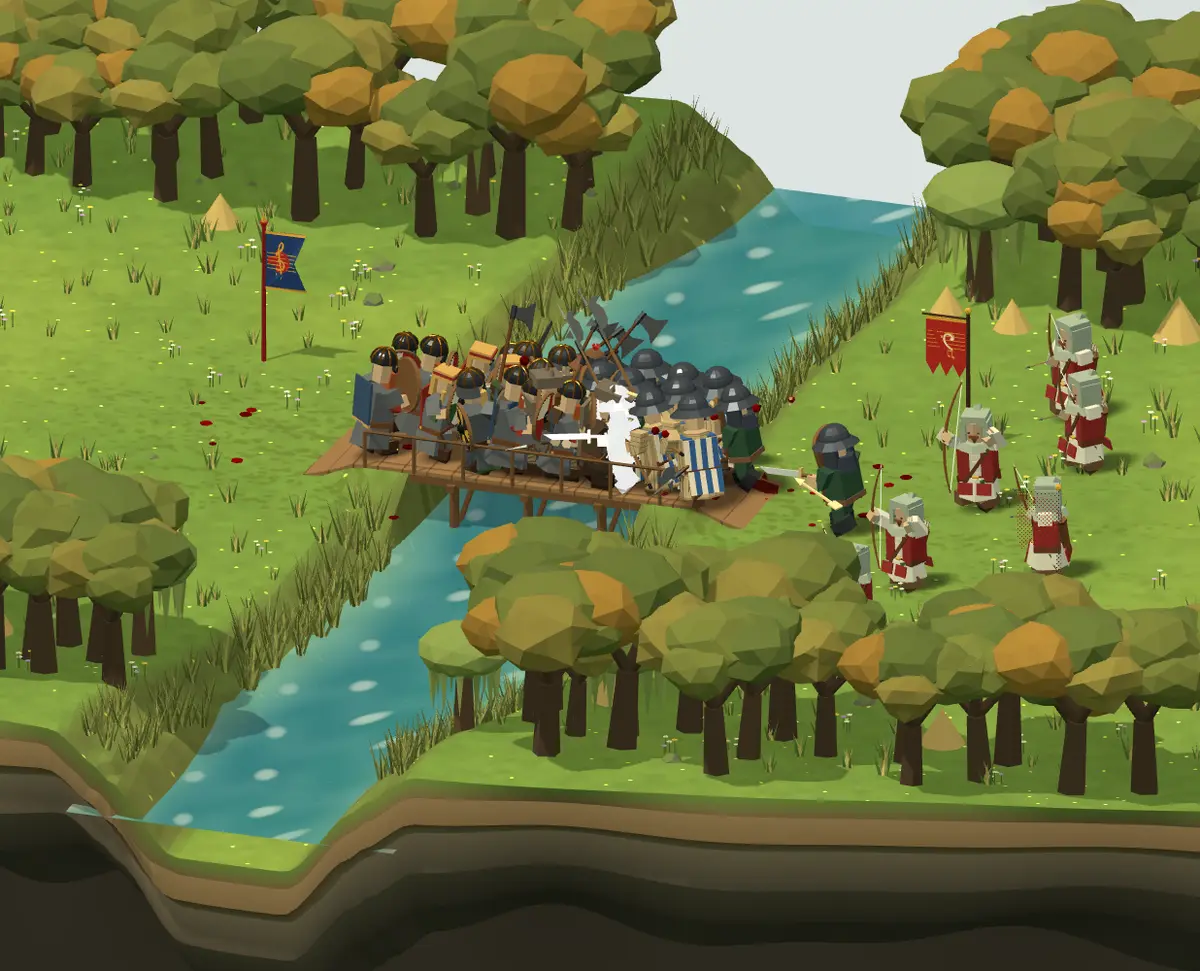
- Red Cliffs (赤壁) and Changban Bridge (长坂桥), from the battles of 208 in the Three Kingdoms, and Hastings and Stamford Bridge, from the year 1066 (12 October).
During the beta most of these fields are not yet open to choose; they are to be earned or given out later.
We are not historians, and we will make mistakes. When we do, we want to hear about it. Getting someone's history right is a way of respecting them, and that matters to us as much as any balance number.